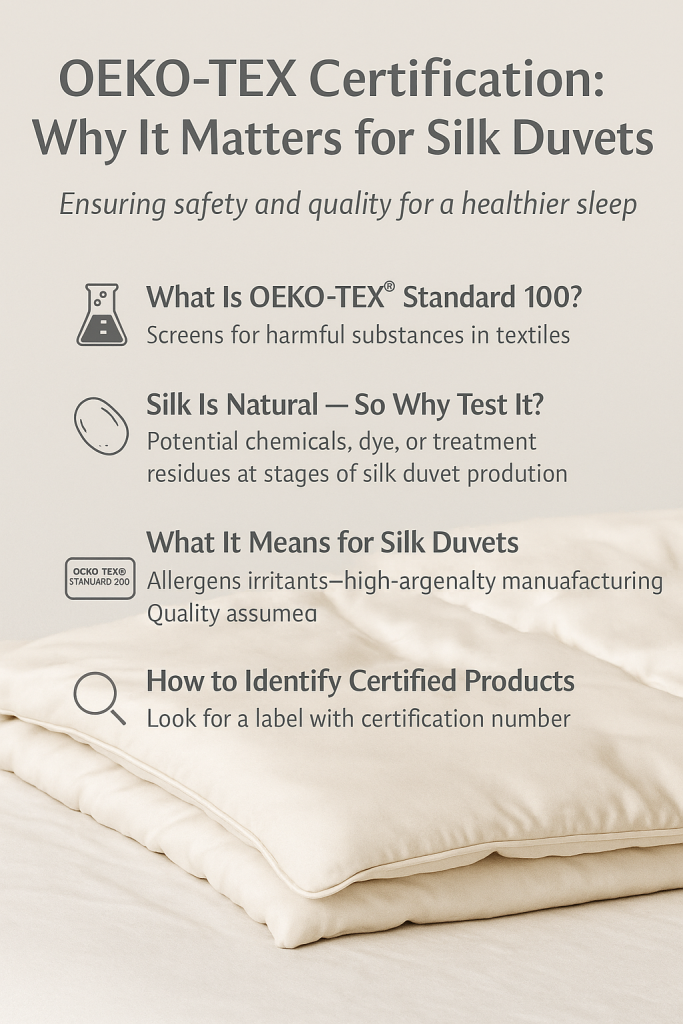
OEKO-TEX Certification: Why It Matters for Silk Duvets

From raw materials to final product, real peace of mind comes from verified safety.
When choosing a silk duvet, most people look for signs of quality: 100% Mulberry silk, long strand fill, handmade construction… These are all important, but there’s another factor that’s often overlooked—and it could be the one that truly determines whether your duvet is safe to sleep in:
OEKO-TEX® Standard 100 certification.
Let’s explore what OEKO-TEX means and why it’s essential—even for something as natural as silk.
✅ What is OEKO-TEX® Standard 100?
OEKO-TEX® is one of the world’s most respected and widely used independent textile safety standards, created in 1992 by the International Association for Research and Testing in the Field of Textile and Leather Ecology.
Put simply: OEKO-TEX = certified safe for direct skin contact.
Products with this label have been tested for over 100 harmful substances, including:
- Carcinogenic dyes
- Heavy metal residues (e.g., lead, cadmium)
- Formaldehyde
- Pesticide and preservative residues
- pH compatibility with human skin
- Allergens and sensitizing chemicals
OEKO-TEX updates its banned substance list annually, and test standards are stricter than many national safety laws.
✅ Silk Is Natural — So Why Does It Need Testing?
A common question is: “Isn’t silk natural and safe already?”
Yes, raw mulberry silk is a natural protein fiber and inherently skin-friendly. But from cocoon to finished duvet, it goes through many processing steps:
- Were harsh chemicals used in degumming or cleaning?
- Was the shell fabric treated with formaldehyde for wrinkle resistance?
- Were insect repellents or fumigants applied during storage or shipping?
These hidden risks could compromise the purity of silk—especially for:
- Allergy sufferers
- Babies and young children
- People with sensitive skin
- Anyone seeking a toxin-free sleep environment
OEKO-TEX certification acts like a safety gatekeeper, ensuring that every part of the duvet is non-toxic and safe.
✅ What Does OEKO-TEX Mean for a Silk Duvet?
1. Safe to sleep with—no irritation or hidden triggers
Whether you’re sleeping under it, hugging it, or letting your baby lie on it, a certified silk duvet means:
✔ No harmful residues
✔ No skin or respiratory irritation
2. Full product accountability
The certification applies to every component—from outer fabric and filling to tags and zippers.
It’s not enough for one material to be safe—the entire finished product must pass testing.
3. A brand’s commitment to safety
OEKO-TEX certification is voluntary and must be renewed annually. Choosing to certify shows that a brand actively prioritizes consumer health.
✅ How to Identify a Real OEKO-TEX Certified Product
Look for the official label, which includes:
📌 Certification number + name of testing institute
(e.g., STANDARD 100 by OEKO-TEX® / SHGO 123456 TESTEX)
📌 You can verify any label via the official website:
👉 https://www.oeko-tex.com
✅ Final Thoughts: Natural Isn’t Always Safe — Certified Is
Even the finest natural silk needs third-party verification to guarantee it’s truly harmless. A silk duvet with OEKO-TEX® Standard 100 certification means you can enjoy its luxury with complete peace of mind.
So when you’re shopping for a high-quality silk duvet, don’t forget to check:
✅ Is it certified safe?
It’s not just a label—it’s a promise of purity and protection for you and your loved ones.