
Why Silk Duvets Are Ideal for Allergy Sufferers – The science behind a healthier, more restful sleep

Introduction
For people with allergies, bedtime can often feel like a battle — sneezing, itchy skin, and nasal congestion are all-too-familiar disruptions. While traditional bedding like cotton can trap dust mites, down duvets may trigger respiratory issues, and synthetic options tend to generate static and attract dust. So, is there a bedding option that can truly minimize these triggers? The answer: silk duvets.
In this article, we’ll explore why silk duvets are an excellent choice for allergy sufferers, backed by science and real-world results.
1. Naturally Hypoallergenic & Antibacterial
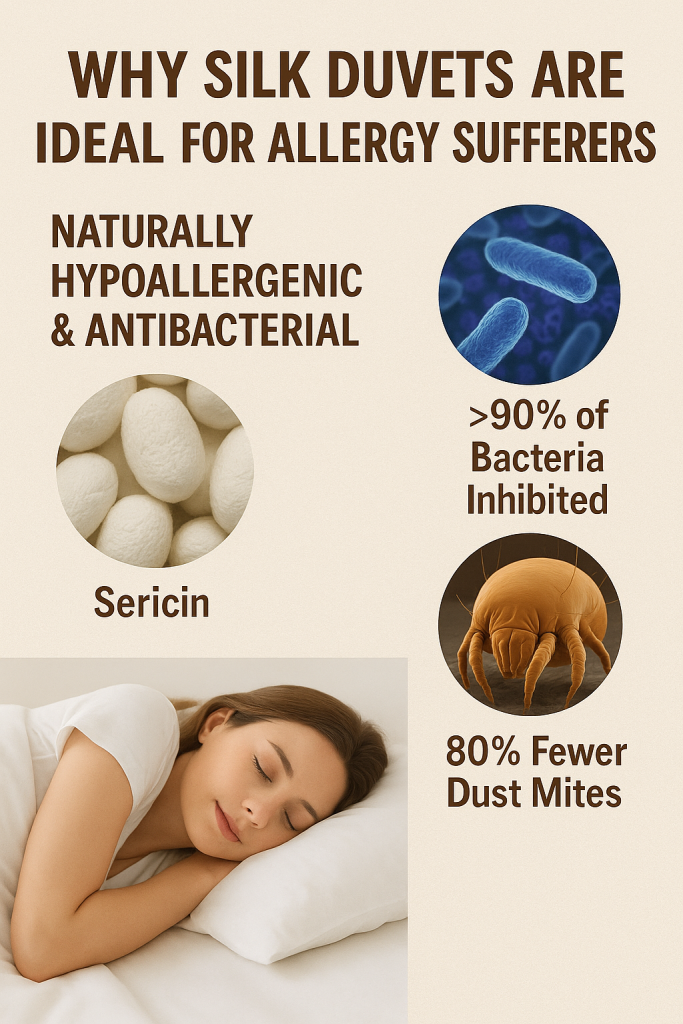
Silk contains a protective protein called sericin, which offers natural resistance to bacteria, mold, and dust mites:
- Scientific studies show that silk inhibits over 90% of bacteria like Staphylococcus aureus and E. coli.
- Even after 3 years of use, silk duvets were found to have 80% fewer dust mites compared to cotton ones.
- The tight fiber structure of silk leaves little room for skin flakes—dust mites’ primary food source.
Case Study: A follow-up study by the Hangzhou Allergy Research Institute found that 78% of allergic rhinitis patients experienced symptom relief after switching to silk duvets.
2. Moisture-Wicking & Mold-Resistant
Moist environments are a nightmare for allergy sufferers—but silk’s natural “breathability” creates a dry, mold-resistant sleep climate:
- Absorbs up to 30% of its own weight in moisture—far outperforming cotton’s 8%.
- Releases moisture twice as fast as cotton in 50% humidity conditions.
- Regulates temperature naturally, staying warm in winter and dry in summer.
Lab Comparison: After one week in the same environment:
- Down duvets reached 75% internal humidity—ideal for mite reproduction.
- Silk duvets stayed below 55%, reducing microbial growth.
3. Gentle on Sensitive Skin
Silk’s composition closely matches human skin, making it ideal for people with eczema or sensitive skin:
- pH level of 6.8–7.2, nearly identical to healthy skin.
- Contains 18 amino acids, including serine and lysine, which support skin health.
- Ten times smoother than cotton, minimizing friction and irritation.
Pro Tip: The Japanese Dermatological Association recommends silk products for patients with atopic dermatitis.
4. How to Choose the Right Silk Duvet for Allergies
Not all silk duvets are created equal. Here’s what to look for:
- ✅ 100% Mulberry Silk (Long Strand)
Look for product testing reports that specify “100% Mulberry Silk Long Filament.”
Burn test: Real silk smells like burnt hair and leaves crumbly black ash. - ✅ Hand-Stretched Layering
Avoid overly tight machine quilting—it can damage silk fibers.
Traditional hand layering preserves silk’s natural structure and breathability. - ✅ Use a Dust Mite-Proof Cover
Choose high-thread-count cotton covers (300+ TC), and wash monthly in 60°C (140°F) water. - ✅ Seasonal Care
Air out the duvet each spring—avoid direct sunlight to preserve the silk.
5. Expert Tips from Allergy Specialists
- Choose silk duvets certified by OEKO-TEX (free from harmful substances).
- Maintain 40–50% humidity in your bedroom.
- Use a dust mite vacuum weekly for added protection.
- Let your new silk duvet air out for 48 hours before first use.
Conclusion: A Smart Choice for Health-Conscious Living
Choosing a high-quality silk duvet isn’t just about comfort—it’s a proactive decision for your health. Acting like a second skin, it protects you throughout the night, minimizing allergic reactions and enhancing your sleep quality.
Make the switch today—and wake up refreshed, every morning.